Payments, the mechanics
BNB Payments on BNB Smart Chain and the Ethereum Address Look-Alike
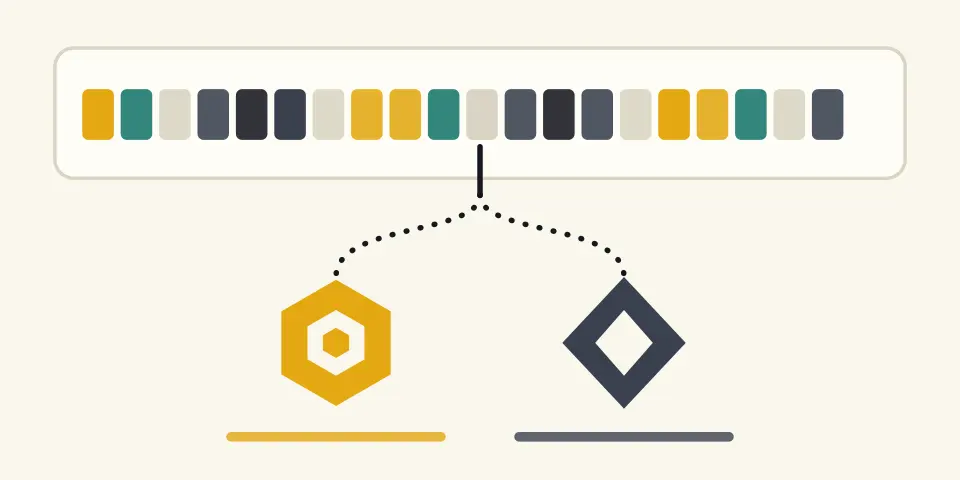
A BNB deposit has three parts that people tend to merge into one: the coin, the address and the network. The coin and the address are things you can read. The network is a setting, and it is the only one of the three that is not written into the address.
This page explains why. It is the technical heart of the site, and everything on the operator pages leans on it.
What is the difference between Ethereum and BNB Smart Chain?
For a reader sending a payment, the differences are mostly behind the scenes. Ethereum and BNB Smart Chain are separate blockchains with separate validators, separate histories and separate chain numbers, 1 for Ethereum and 56 for BNB Smart Chain. Each has its own native coin that pays for transactions: ether on one, BNB on the other.
What they share is the machinery that runs programs on them. BNB Smart Chain was built to be compatible with the Ethereum virtual machine, so wallets, tools and token standards written for one work on the other with almost no change. Compatibility is the whole reason the chain became popular, and it is also the reason the two look the same from the outside.
Why does a BNB address look like an Ethereum address?
An address on both chains is derived from a public key in the same way: hash the key, keep the last twenty bytes, write them as forty hexadecimal characters and put 0x in front. Most wallets then apply an optional mix of upper and lower case as a checksum, and they do it identically for both chains. A wallet that holds one secret key therefore shows one address, and that single address is valid on Ethereum, on BNB Smart Chain and on every other chain built the same way.
That is not a quirk of one wallet. Cloudbet’s cashier data, which we read at source, describes its Ethereum route and its BNB Smart Chain route with one and the same address pattern: a 0x and forty hexadecimal characters. The software that checks the address on the way in cannot tell the two routes apart, because the strings really are the same kind of string.
The older chain in the Binance family wrote addresses beginning with bnb1, which nobody could confuse with an Ethereum one. The danger belongs to the newer, compatible chain precisely because it looks familiar.
Can a casino cashier tell which network a deposit used?
The cashier cannot see your intention. It gives you a deposit address on a chosen network and then watches that network for incoming transfers to that address. If you send over a different chain, no transfer appears on the watched chain, and the cashier has nothing to credit. The money is not in transit. It sits at that address on the chain you used, and the operator’s system is not looking there.
Your wallet is no better placed. Its check is a format check: does this string have a 0x and forty hexadecimal characters, and does the checksum case agree? Both answers are yes for an address meant for the other chain. Some wallets can warn you when you paste an address that is a known contract, and some show a banner for an unfamiliar network, but there is no general rule that makes the address itself carry the network.
So the network is a human decision made on two screens. On the casino side you choose it when you ask for a deposit address. On the wallet side you choose it when you pick which network to send from. A mismatch between the two screens is the entire failure, and nothing in the process compares them for you.
What do operators say about the network?
Three of the twelve operators put the network for BNB in writing. Stake’s help centre gives “BSC (BEP20) network” on the BNB row of its table of supported networks. Cloudbet’s fee page data labels the route “BNB Smart Chain”. Duelbits shows “Binance Smart Chain” in a table inside a help article. Rollbit, Roobet, BetFury, BitStarz and Sportsbet.io name the coin and, on the pages we read, no network for it. The operator pages have the detail for each.
The warnings are blunter than the tables. Rollbit’s deposit help says funds are “generally unrecoverable if sent via the wrong network”. Duelbits lists “irretrievable/unrecoverable funds” among the outcomes of using an unsupported network, and Roobet says a coin or token it does not accept “will result in that cryptocurrency being lost”. Stake puts the same rule positively: it is important that you send coins through their corresponding blockchain networks.
It’s important that you send coins through their corresponding blockchain networks.Stake help centre, article on acceptable blockchain networks
Where can you see which chain holds your coins?
The one place where the chain becomes visible is a block explorer. BscScan shows BNB Smart Chain and Etherscan shows Ethereum. An address pasted into each shows the balance that exists on that chain, and the same address will often show a balance on only one of them. That is a way to learn where a transfer actually landed, and it is worth knowing about before you need it.
It is also the cleanest demonstration of the whole page. Take any 0x address and open it on both explorers. Both pages load, because both chains accept the address. Only one of them shows your money.
BNB address questions
- Is my BNB address the same as my ETH address?
- In most wallets, yes: one key gives one 0x address that is valid on both chains. The balances are separate, one per chain.
- Does the address checksum reveal the network?
- No. The mixed-case checksum is calculated the same way on both chains, so it confirms the string was typed correctly and says nothing about the chain.
- What is the chain number of BNB Smart Chain?
- 56. Ethereum’s is 1. Wallets use the number internally to keep transactions signed for one chain from being valid on another.